


The Water Cycle
Water is always being recycled through our environment. It moves through the air, vegetation and earth. This continuous movement is called the water cycle. It starts when water from lakes, ponds, or the ocean is warmed by the sun and evaporates into water vapor. This invisible vapor rises into the atmosphere where it cools and changes back into water droplets, through the process of condensation. When the water vapor condenses in the air, we get clouds.
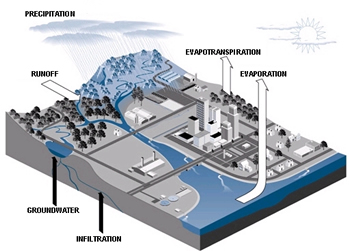
As more water vapor cools into the clouds, the water droplets that form the clouds become larger and larger. When they get big enough, they fall to the ground as rain. Some of the rain runs off the land and drains into rivers, lakes and streams (runoff).
Some of the rainwater soaks into the ground (infiltration) and becomes groundwater. Groundwater is under the ground and in the soil. It is the water that plants use.
People sometimes drill wells to get to the groundwater. They may use groundwater for drinking water or to water their crops.
As water falls to earth in various forms of precipitation, plants intercept or catch some of the water before it falls to the ground. This is called interception.
Plants also put water back into the air through a process we call transpiration. When the sun shines on plants, tiny drops of water are released into the air. Transpiration is how plants lose water out of their leaves.
The cycle repeats over and over again. As more water vapor cools into the clouds, the water droplets that form the clouds become larger and larger. When the droplets get big enough, they drop down to the ground as rain, or precipitation. Rain either soaks into the ground (infiltration) and becomes groundwater or it runs off the land and drains into rivers, lakes and streams(runoff).
Another way that water vapor travels in the air is through transpiration. Transpiration is how plants lose water out of their leaves. When the sun shines on plants, tiny drops of water are released into the air.
Groundwater is under the ground and in the soil. It is the water that plants and animals use to drink. Some water will seep through the ground and flow into a river, lake or stream and help keep them filled with water. The cycle repeats over and over again.
The earth's water cycle contains 326 million cubic miles of water. Nearly 97 percent is saltwater found in the earth's oceans. Two percent is glacial ice. That leaves about one percent available for humans as fresh water from streams, rivers, lakes, the atmosphere and groundwater.
© Copyright 2013 The City Of Chickamauga Georgia. All Rights Reserved.
